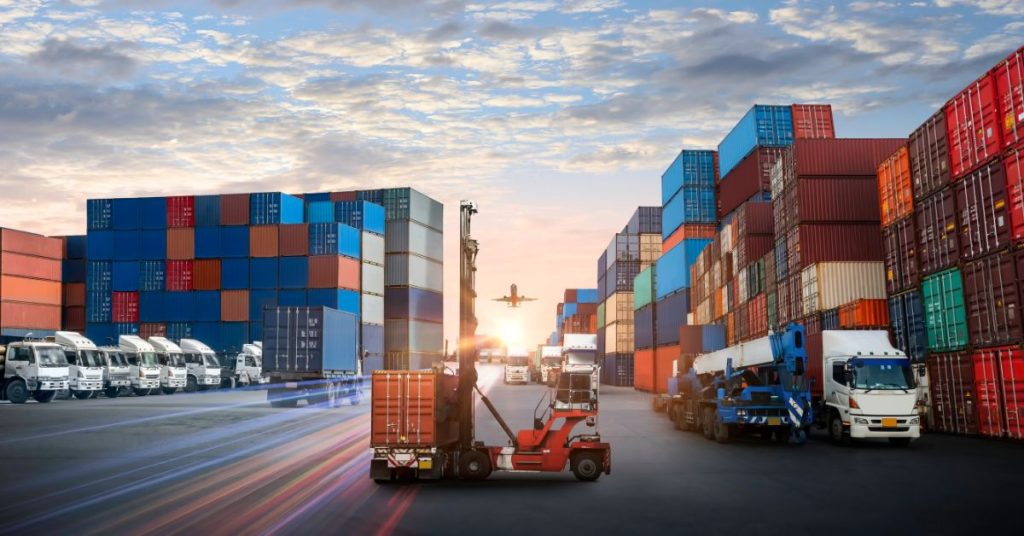
Did you know that more than 80% of cargo is transported globally using shipping containers? However, ensuring they reach their destination safely is a major concern for businesses. Many people may not realise that there are different types of containers, each is designed for specific types of cargo.
In this blog, Brisbane Towing and Recovery will share different types of shipping containers and also provide essential tips for transporting them safely to your business address. If you really want to streamline your logistics, reduce risks, and ensure your goods arrive in perfect condition, keep reading till the end.
Let’s begin!
If you are still thinking, “Oh, shipping containers are a one-size-fits-all solution”, you’re wrong. They come in various types. Each is designed to handle specific cargo and transportation needs:
Also called dry containers, these are the most widely used type. General containers are fully enclosed and weatherproof. They are perfect for transporting dry goods like textiles, electronics, and furniture. They come in standard sizes (typically 20 and 40 feet) which allows for flexibility in managing different cargo volumes.
Flat rack containers are specifically designed for oversized or irregularly shaped cargo that won’t fit in standard containers. They are used to ship items like heavy machinery and vehicles.
Given the collapsible sides and no roof, flat rack containers facilitate easier loading and unloading from the top or sides. These types of containers are mostly used for industrial and construction shipments.
As the name suggests, open-top containers are made for cargo that needs to be loaded or unloaded from above. Companies in Australia frequently make use of these containers to transport different types of heavy machinery, timber, or bulk materials. Or you can say, cargo that can’t be easily loaded through standard side doors.
Open-top containers come with a removable tarpaulin cover. This protects against the weather while allowing for handling of oversized cargo.
Next up on our list of different types of containers are corrugated boxes with double doors. These feature doors at both ends which makes loading and unloading bulky or palletised goods much easier. Double-door containers are beneficial for businesses in Brisbane (or any other part of Australia) that handle high-turnover cargo.
They can also be used for items that need to be accessed from different points during transport.
Those who look at high cube containers might find them to resemble general-purpose containers. What they are not aware of is the fact that these provide additional vertical space. As a reason, they stand one foot taller than standard containers. The extra height is ideal for transporting larger or taller items such as industrial equipment, furniture, or stacked goods.
Businesses also prefer high cube boxes for volumetric cargo that takes advantage of increased capacity.
Open-side containers come with doors along one of their longer sides in addition to standard end doors. This feature allows for wider loading access. Thus, making them suitable for handling long items like steel rods, planks, or large panels. Open side containers provide flexibility for scenarios where loading and unloading require more space than traditional containers can offer.
We bet most of our readers haven’t heard of this different type of container. ISO reefer containers are specialised refrigerated units used for transporting goods that are sensitive to temperature including perishable foods, pharmaceuticals, and chemicals.
They feature an active cooling system that keeps cargo within specific temperature ranges, ensuring its integrity during transit. ISO reefer containers depend on strict cold chain logistics.
Oh, you guessed it from the name already? That’s great! But those who are still clueless, let us tell you that insulated containers are designed to maintain a consistent internal temperature. This is also the reason why people call them thermal boxes as they shield cargo from extreme temperature changes in Australia.
Unlike reefer containers, however, they lack active cooling systems. For instance, if your company wants to carry certain food products or sensitive materials that need temperature stability without refrigeration, you can consider going with this option.
Now this type of container is all about its name – half the height of standard containers. While being so different and small in size, they are still very well suited for transporting dense, heavy cargo like metal ores and stones. Their reduced height improves stability and safety when carrying heavy loads. Particularly, in the difficult transport conditions of Australia.
At last, we got another different type of container called swap body containers. You might not find these much in the Lucky Country but in Europe, they are common. They are crafted for smooth transfer between rail and road transport. Swap body boxes come with detachable bodies and lack the standardisation of ISO receptacles. Meaning, they allow for more customization.
These containers are frequently employed for domestic freight. They offer flexibility in intermodal logistics operations.
8 useful tips for transporting light machinery and equipment
We bet now you understand that every type of container has a unique function. But they all share the same goal – ensuring efficient, secure, and cost-effective movement of goods throughout Australia. But hey, it’s time to address the elephant in the room i.e. how to carry them safely after they reach the docks.
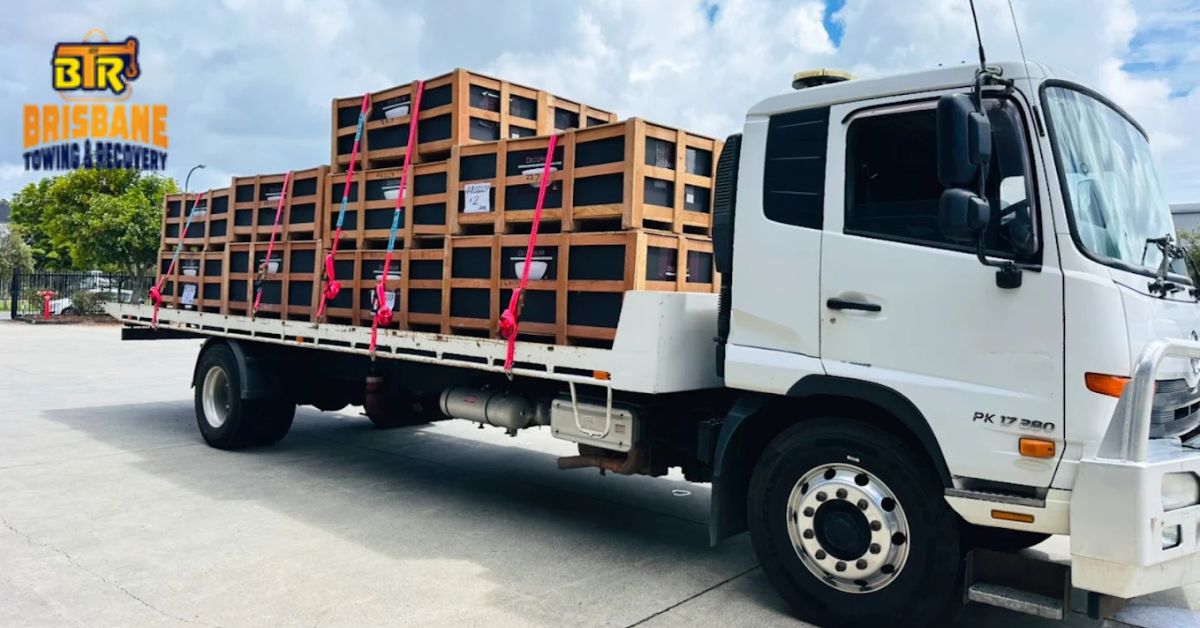
Here are some points Brisbane Towing and Recovery wants you to keep in mind when transporting your business container via roads:
1 Proper weight distribution
Loading containers unevenly can lead to vehicle instability. It can raise the chances of accidents. Always make certain to distribute the weight evenly within the container. Also, secure the cargo so it doesn’t shift during transport.
2 Use certified lifting equipment
If you have in-house transporters, check if they are using certified cranes, forklifts, or spreader bars for loading and unloading containers. That way, you can reduce risks. Also, steer clear of makeshift tools. Why, you ask? They can result in damage or accidents.
3 Verify load limits
Before transporting your goods to its destination, confirm that the total weight of your selected container type and its cargo adheres to legal road limits in Australia. Remember, overloading vehicles will not only pose risks to road safety but also result in significant fines.
4 Inspect containers thoroughly
Examine containers for any damage. Rusted hinges, weak flooring, and structural deformities are some common things to look for in different types of freight shipment crates. Damaged containers can endanger both the safety of cargo and Australian road users.
5 Secure container properly
And here comes the most important point when transporting different types of containers through roads. Make sure to use twist locks, chains, or straps to firmly attach the container to the truck or trailer. This will help you prevent it from shifting or coming loose during transit (especially on bumpy roads).
6 Adhere to Australian road regulations
Our next tip for businesses will be to get to know the road transport rules. This includes allowable dimensions, weight restrictions, and designated routes for oversized containers. Following these regulations will help you ensure a smooth and legal journey.
7 Choose pro towing services
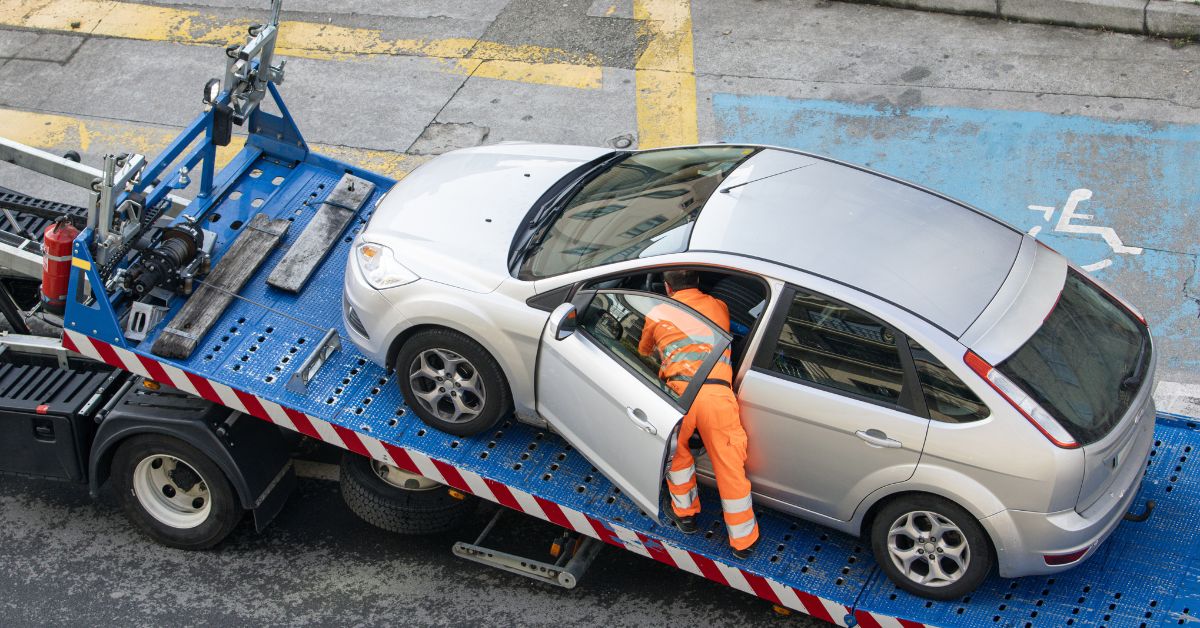
It is highly advised to work with professionals who have been providing container towing services for years. Their skills and equipment will ensure your company’s safe container transport. You can minimize the chances of accidents, all while getting timely delivery.
Do you live in Brisbane or surrounding areas and need help with container shipment? Brisbane Towing and Recovery is the partner you can trust. Our team provides a smooth, secure, and efficient container transport experience to meet your cargo needs.
Known for handling all types of containers with care, we have drivers with decades of experience and advanced equipment. Serving Brisbane, Logan, Ipswich, Buyside, Moreton Bay, Gold Coast, Sunshine Coast, Toowoomba, and nearby suburbs in Australia, we guarantee reliable container truck services across the region.
Whether for business or personal purposes, hiring us means you can relax knowing your containers will be transported safely and on schedule.
Learn more about our container towing services in Brisbane
There you go!
We have shared with you a list of different types of containers and tips to carry them safely on Australian roads. We understand how important and daunting moving containers can be for businesses. But having the right information and support will make things a lot simpler.
If you’re looking for trustworthy advice or professional container towing services, Brisbane Towing and Recovery is ready to assist you. Reach out to us today for reliable solutions. Call us on 0438 155 555 to start a discussion.
Also read:
A comprehensive guide on how to handle a bike breakdown
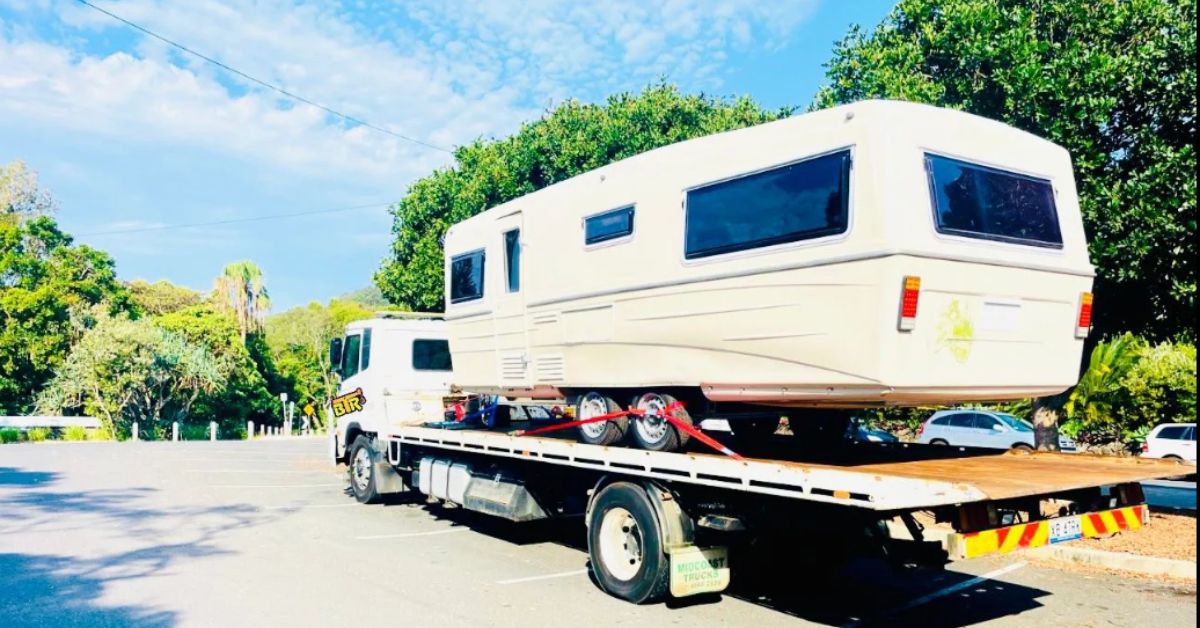
Here’s how to tow a caravan
Don’t forget to check out our most popular services: